
Screening of From Myanmar to the World
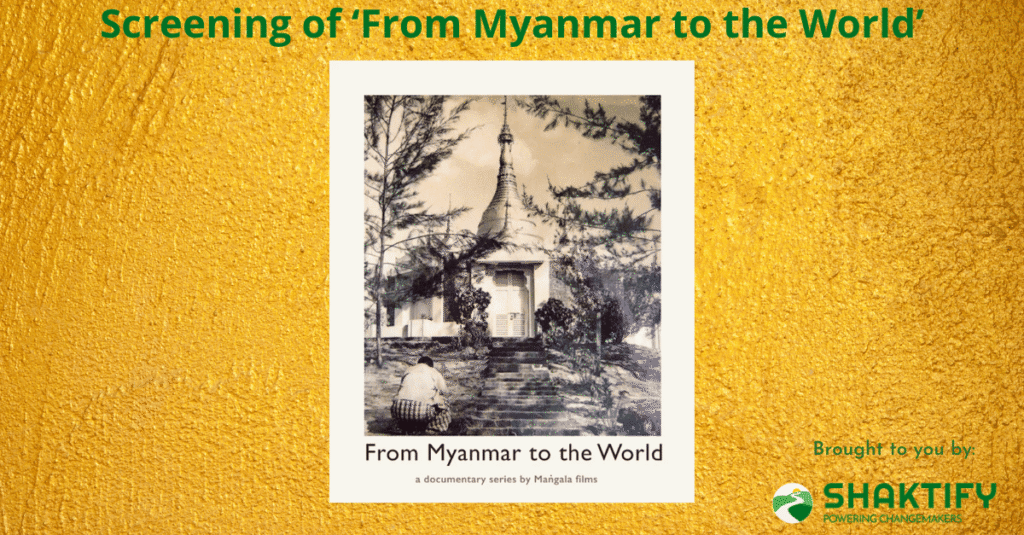
This documentary directed by Marta Van Patten is an account of how the ancient Indian tradition of Vipassana meditation — lost for many centuries — was revived. It is the remarkable story of S N Goenka, who brought back the Vipassana meditation technique from Burma to India which thereafter spread to the world. The documentary film is in two parts.
In Part I, the film focuses on how it all started. In the 60s and 70s many young Westerners in particular were disillusioned with their corrupt and war-torn societies and were looking for something more, something different, and headed East and many ended up in India. Some of these seekers enrolled in courses with S N Goenka in the retreats he had begun giving in India in 1969. The courses were less structured than they later became, but by all accounts, were also very demanding in other ways, owing to a distinct lack of facilities. This is the story of how Vipassana meditation spread from one centre in 1976 to as many as 272 permanent centres and 135 make-shift centres across 92 countries today. It is the story of how a movement was born and spread in a self-organising way. It is an account of those at the forefront who helped make this movement happen.
Part II dwells on how the practice of Vipassana meditation has evolved from the times of the Buddha to what it is today. Long ago, after receiving guidance from the Buddha, meditators would go to remote and secluded places to meditate, especially caves that provided shade, and spring water normally found nearby. Fast forward to the 1950s, when Burmese meditation master Sayagyi U Ba Khin was planning his ideal meditation center in Yangon. Inspired by some ancient structures in India, he chose a design featuring concentric rings of meditation caves, sheltered under the soaring structure of a golden Burmese zedi, or pagoda. This is the story of how Sayagyi U Ba Khin’s design was re-created first in India by his disciple, S.N. Goenka, and decades later in locations all over the world. It was an attempt to recreate the conditions found in a cave by building separated rooms in a circle under a pagoda structure. For a meditation tradition that claims to have nothing to do with organized religion, some questioned the seemingly religious architecture. But are the pagodas merely decorative, or is there a practical function, something meditators can actually experience and benefit from?
When:
Part I – Tuesday, 27 October ‘26
08:00 ET | 13:00 UK | 14:00 CET | 17:30 IST | 20:00 SINGAPORE
To know the exact time in your time zone, please click here.
Part II – Tuesday, 10 November ‘26
08:00 ET | 13:00 UK | 14:00 CET | 18:30 IST | 21:00 SINGAPORE
To know the exact time in your time zone, please click here.
Facilitated By
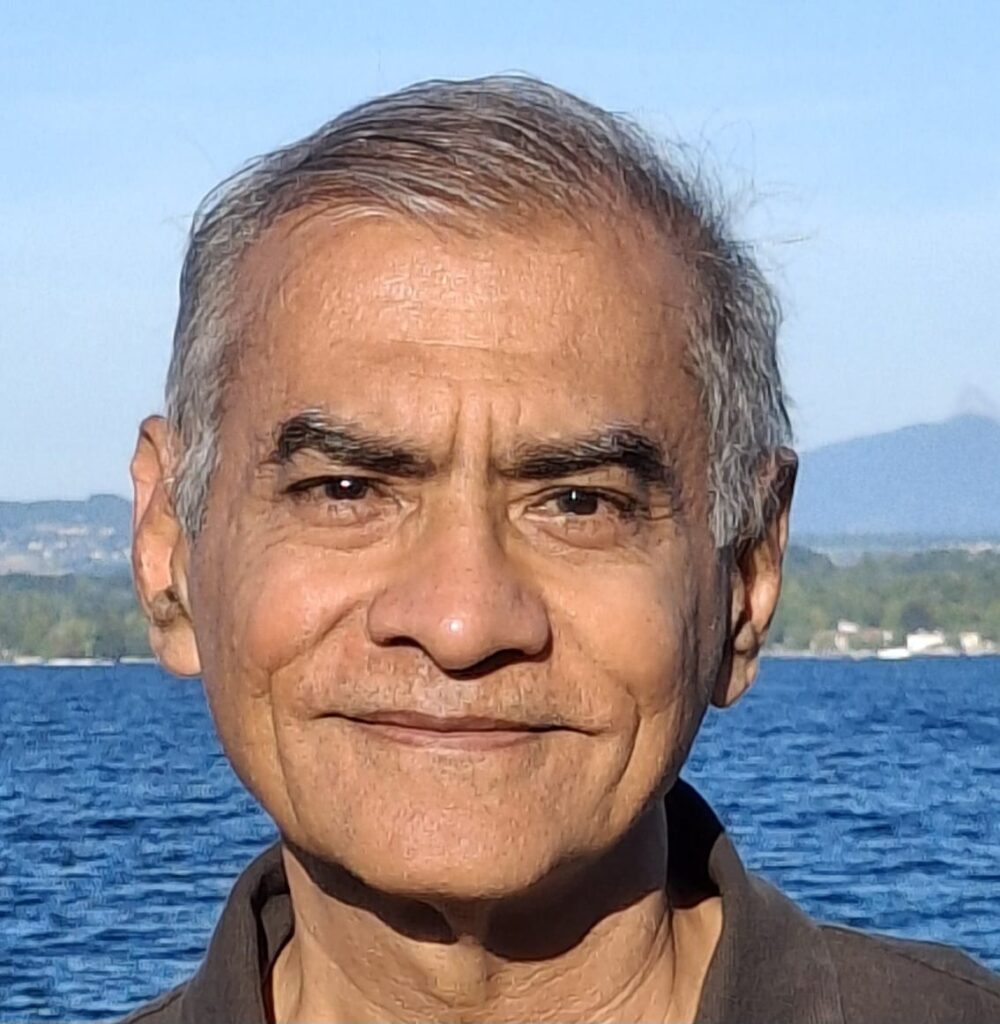
Shakti Saran
Facilitator Profile
Shakti Saran
Facilitator Profile